
Sri Lanka Launches Special Dengue Control Programme Across 11 Districts
The National Dengue Control Unit (NDCU) has launched a special seven-day dengue control programme across 11 districts in Sri Lanka in an effort to curb the rapid spread of dengue fever.
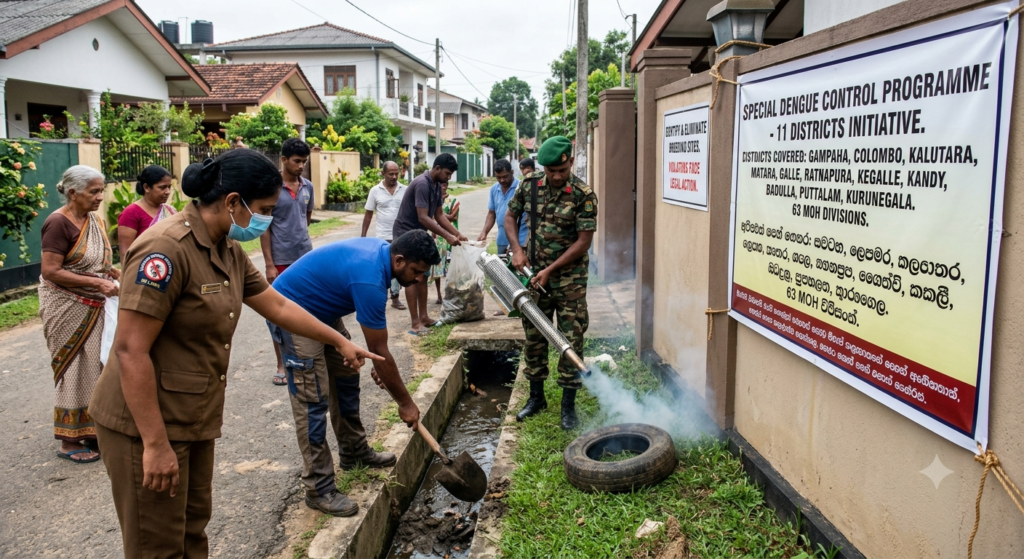
According to NDCU Director Dr. Kapila Kannangara, the programme commenced today (July 16) and is being carried out through 63 Medical Officer of Health (MOH) offices covering the selected districts.
The dengue prevention campaign will be implemented at the Grama Niladhari Division level, with health officials conducting inspections and awareness activities to eliminate mosquito breeding sites.
Dr. Kannangara also stated that fumigation activities will be conducted during the morning and evening to help reduce the number of dengue cases being reported each day.
Dengue Cases Continue to Rise
The National Dengue Control Unit reported that 71,235 dengue cases have been recorded across Sri Lanka so far this year.
Health authorities also confirmed that the dengue death toll has increased to 49, highlighting the continued public health threat posed by the disease.
According to the NDCU, 175 Medical Officer of Health (MOH) divisions across the country remain classified as high-risk dengue zones, with health officials continuing surveillance and vector control activities.
Stop Dengue Campaign Continues
Meanwhile, the “Stop Dengue – National Dengue Eradication Programme” is being conducted for the eighth consecutive day, focusing on the Colombo, Gampaha, and Kalutara districts, where a significant number of dengue infections have been reported.
The campaign is organised by the Maharaja Media Network, led by News 1st, in collaboration with the Ministry of Health and Mass Media, with the aim of raising public awareness and encouraging communities to eliminate mosquito breeding sites.
Health authorities continue to urge the public to inspect their homes and surroundings regularly, remove stagnant water, and cooperate with Public Health Inspectors to help reduce the spread of dengue.
Read more articles like this on www.srilankanpost.com