Sri Lanka $1 Billion X-Press Pearl Compensation Dispute Escalates
A Singapore-based shipping company has refused to pay the Sri Lankan Supreme Court’s order of US$1 billion compensation for the X-Press Pearl disaster, calling it a “dangerous precedent” for global maritime trade.
X-Press Feeders CEO Shmuel Yoskovitz told AFP that the penalty undermines the principle of limited liability in shipping. He warned that compliance could increase insurance premiums worldwide, passing costs onto consumers.
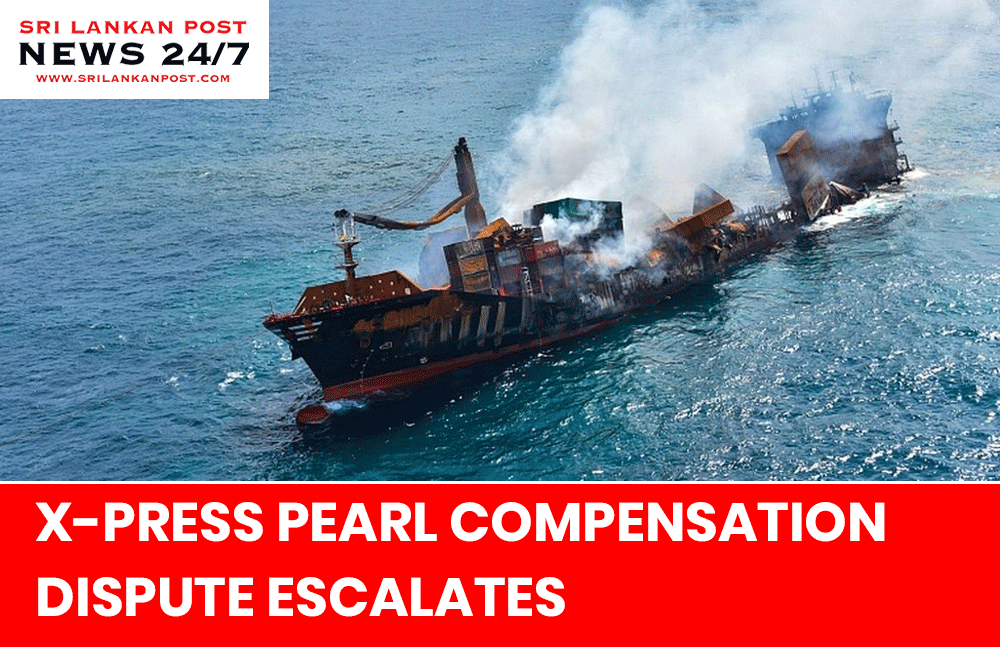
The MV X-Press Pearl, operated by X-Press Feeders, sank off Colombo in June 2021 following a fire caused by a nitric acid leak. The vessel carried hazardous cargo, including 81 containers of acids and lead ingots, along with hundreds of tonnes of plastic pellets. Ports in Qatar and India had earlier refused to accept the leaking cargo.
The disaster caused Sri Lanka’s worst marine pollution, with tonnes of microplastics contaminating 80 km of coastline. Fishing was banned for months, and local ecosystems suffered long-term damage.
In July, Sri Lanka’s Supreme Court ordered the company to pay an “initial” US$1 billion, with the first US$250 million due on September 23. The ruling also left room for further penalties.
Rejecting the order, Yoskovitz said:
“We are willing to pay more, but it must be under marine conventions, with a full and final settlement. To live under an open-ended penalty is impossible for operations.”
The company says it has already spent US$170 million on wreck removal, clean-ups, and compensation for fishermen. However, the court warned that non-payment could lead to criminal proceedings if X-Press Feeders’ representatives are present in Sri Lanka.
The case has also sparked legal battles in London and Singapore, with Sri Lanka challenging X-Press Feeders’ liability cap of £19 million approved by the UK Admiralty Court. A separate lawsuit in Singapore is on hold until the London case moves forward, with a pre-trial hearing set for May 2026.
Environmental activists argue the long-term impact of the pollution is still unfolding. “While beaches were cleaned, the damage to marine life will persist,” said Hemantha Withanage of the Centre for Environmental Justice.
The Sri Lankan Supreme Court will review the matter further on September 25.
Read more articles like this on www.srilankanpost.com